
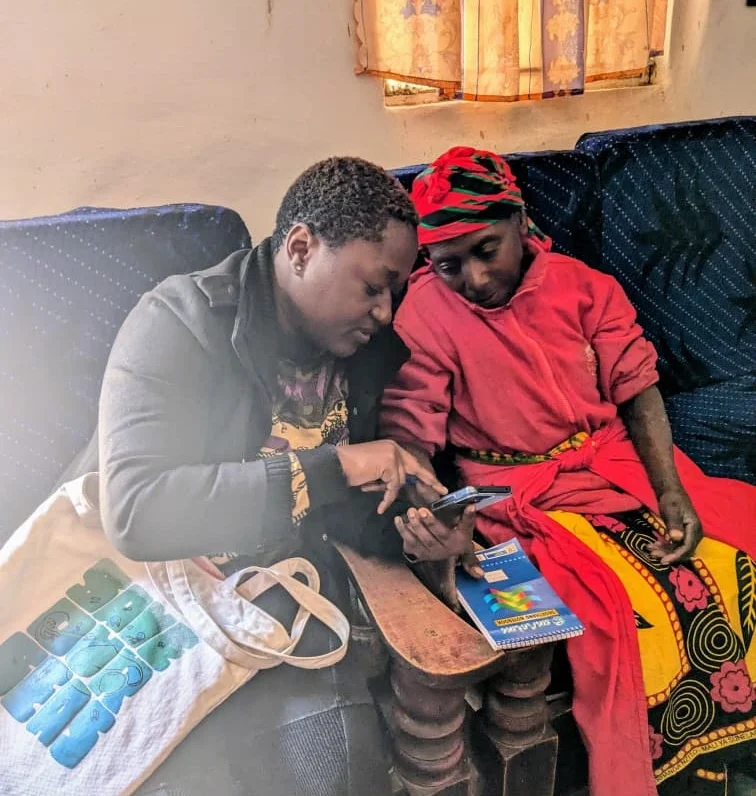
I was watching a TikTok video yesterday: a Kenyan content creator claiming that if Kenyans were sent to live in Tanzania, they wouldn't survive a single day. Too slow, too polite: “We will turn the country upside down.”
I did what most viewers do, went straight to the comment section to see how people felt about the so-called Tanzanian slowness :D. What I found was a long, very funny thread of Kenyans lamenting the greetings, in particular:
“I can't deal with the shikamoo… shikamoo… eii hapana.”
“Ukienda dukani unaanza na shikamoo anko, naomba uniuzie. Walai Kenyans we can't survive in Tanzania even a single day.”
“Mimi ni pole sana and so polite but I can't survive…like how eti unaita stranger dada, mwanangu, ndugu yangu? can't do that. Kila saa unaitwa shoga yangu.”
And then the other recurring complaint:“naomba.” Asking for something at a shop, in Tanzania, sounds like pleading, even when you are the one paying.
"Maximizing kusema naomba hata kama wewe ndio unalipia hio kitu."
“Ukienda kwa shop ukisema ‘Nataka’ utaonekana you are rude. Tunatumia magical words like may I, please, not can I or I want. Hii yote ni sababu ya Tanzania=Socialism, Kenya=Capitalism.”
That last line (Tanzania as socialism, Kenya as capitalism) is one commenter's theory, not a fact I would defend, but it is a good one: it is reaching for some explanation for why two neighboring countries, sharing a language, produce such different defaults for how a stranger gets addressed.
One Kenyan living in Tanzania put it more simply, without needing a theory at all: “Walai sitamani Kenya hata kwa viboko. Tanzania is the sweetest place to live; everything works in order.”
I found the whole thread funny, and also useful, because it is describing something real; it is just calling it the wrong thing. What outsiders read as slowness is not slowness. It is ukarimu.
Ukarimu is not a personality trait. It is the protocol
Ukarimu is generosity, warm reception, hospitality; the value that governs how a stranger enters and is received by a Tanzanian community. It shows up in the shikamoo, in the naomba, in the extended greeting exchange that can eat five minutes before anyone gets to the actual point.
None of that is inefficiency. It is a test, gently administered: are you someone who understands that you are a guest here, or are you someone who thinks your business is more important than the relationship you are standing inside of.
For most visitors, failing that test costs you a slightly cold shopkeeper. For a qualitative researcher, failing it costs you the data.
I once arrived at a site for a scheduled focus group and found the venue empty. Not because participants hadn't come, they were gathered right outside the building, waiting.
The community elder hadn't been consulted. The local government official whose area covered the village hadn't been informed. The logistics had been arranged. The relationships had not.
I didn't start the group. I sat with the elder, explained the purpose of the research, answered his questions, sought his blessing, and returned the following day. That delay is what won me a place of welcome in that community; not the consent form, not the introduction letter, the delay itself.
What FPIC is trying to formalize, ukarimu already does
This is the part of this I think is worth saying plainly, because it is the part my training gives me a specific vantage point on: a lot of international development and research protocol is spent trying to engineer, procedurally, something Tanzanian communities already have a name for.
Free, Prior, and Informed Consent (FPIC) is the formal international standard for how communities are supposed to be engaged before a project affecting them proceeds: consent given freely, ahead of time, with full information, without coercion.
I have spent weeks moving through that formal process village by village on community projects, facilitating assemblies, sitting through Village/Ward committee meetings, translating consent materials into Kiswahili so the “informed” part of informed consent actually meant something to the people being asked to give it.
What struck me, doing that work project after project, is that FPIC on paper is a checklist: disclosure, consultation, documented agreement. FPIC in practice, in a Tanzanian village, runs on ukarimu. The community isn't deciding whether to sign a form.
They are deciding whether you are the kind of outsider who arrives correctly; who greets the elder before the agenda, who accepts tea before the interview, who returns when asked to return instead of pushing through. The donor framework formalizes the outcome, but the culture was already supplying the mechanism.
That is not a coincidence you would notice from a training manual. It is the kind of thing you only see after you have been the researcher standing outside a locked venue, recalculating a field schedule that a funder back in another country expects you to keep to the day.
The same test, wearing different clothes
The village FPIC assembly is the clearest version of this, but it is not the only version. Once you know to look for it, the same test shows up in every field context I have worked in, just wearing different clothes.
On environmental audit work, the person standing between you and the data is rarely the one whose name is on the consent form. It is the site supervisor who decides how long the plant tour takes before you are allowed near the workers, or the community liaison officer who decides whether the meeting with affected households happens this week or next month.
I have sat through tea I did not ask for, and small talk about a supervisor's family, before a single audit question was welcome. Rush that, and the tour is scripted; the workers you are allowed to speak to have been chosen for you; the “no concerns raised” box gets ticked because no one trusted you enough to raise one.
In market and household-level fieldwork, the protocol shifts again but the underlying test doesn't. Before a cooperative chair will let you near her members, she is reading whether you understand that her role is to protect them from researchers who take and don't return anything.
I have learned to bring findings back to a community before publishing them elsewhere, not because a protocol required it, but because the alternative is being remembered as someone who extracted. That memory outlasts any single project; it decides whether the next researcher who arrives with your name as a reference gets in the door at all.
I have also watched the shortcut fail, from the outside. A team arrives on a tight timeline, skips the greeting sequence, goes straight to the survey instrument because the schedule doesn't have room for tea. The numbers still come back. Response rates look fine on paper.
What doesn't show up in the dataset is that half the answers were the shortest, safest version of the truth, the version you give someone you don't trust yet, dressed up to look complete. Nobody flags that in the report, because a survey has no field for “this respondent decided you hadn't earned the real answer.”
Different settings, different gatekeepers, same underlying question every time: has this outsider understood that they are a guest, or do they think their business outranks the relationship they are standing inside of.
The part that actually costs you something
This is where I will be direct about the tension, because “be patient and respectful” is easy advice to give and much harder to actually protect. A fieldwork mission has a budget.
It has a timeline a supervisor is tracking against a donor's calendar. Every day you don't run the group you had planned to run is a day you have to account for to someone who is not standing in that village, that market, or that audit site with you.
Absorbing that cost, choosing the elder's blessing, the supervisor's tea, the cooperative chair's trust, over the day's schedule, more than once, across more than one kind of fieldwork, is the actual signal of whether a researcher takes community relationships seriously or just says the right words about them in a proposal.
Anyone can write “culturally sensitive approach” in a methodology section. Far fewer people will eat the schedule slippage it actually requires when a funder is asking why yesterday's target wasn't met.
I have made that trade enough times, across enough different kinds of fieldwork, to trust it as a rule rather than a one-off judgment call: the relationship has to be built before the data collection starts, not run in parallel with it.
Every time I have tried to shortcut that (treat the greeting, the tea, the elder's blessing as a formality to get through quickly) the group has been thinner, guarded, performative.
Every time I have given it the time it was asking for, people have been extraordinarily generous with their actual opinions.
Why this belongs in how we train researchers, not just how we talk about culture
None of this means naomba is weakness, or that shikamoo is submission, or that slowness is a flaw waiting to be optimized out of Tanzanian life. It means those things are doing work (social, relational, consent-granting work) that a rushed researcher will never see, because by the time it would have shown itself, they have already been quietly filtered out.
Methodology training teaches FPIC as a procedure to follow. It rarely teaches that the procedure only functions if you are also fluent in the unwritten protocol underneath it; the one a village elder, a site supervisor, or a cooperative chair is actually testing you against, long before anyone signs anything.
That fluency isn't cultural trivia. It is the actual mechanism by which a stranger becomes someone a community will speak honestly to.
Concretely, that means the “engagement plan” section of a research proposal should budget the relational entry as its own line item, not fold it silently into the consultation timeline. It means training new field researchers to recognize the tea, the greeting, the delayed meeting as data collection, not as time lost before data collection begins.
And it means being willing to tell a funder, before the fieldwork starts, that the schedule has to leave room for a community to decide you are trustworthy, because that decision cannot be scheduled.
So no, Kenyans probably wouldn't survive the shikamoo. And Tanzanians would probably find Nairobi's directness bruising in the other direction. Neither is a flaw. It is just two different answers to the same question every fieldworker eventually has to face: what does it actually take to be trusted by people who owe you nothing.
Thank you very much. I have learned a lot from this blog post. It has helped me a lot. I live in Tanzania as a dependant on account of my offspring. It takes time to come to terms with the kindness and protocol. I am grateful.
Thank you very much for sharing your experience. I am glad the post resonated with you. Karibu sana Tanzania!